Valorant Champions Shanghai group stage delivers the clearest read yet on who can win the 2026 world title
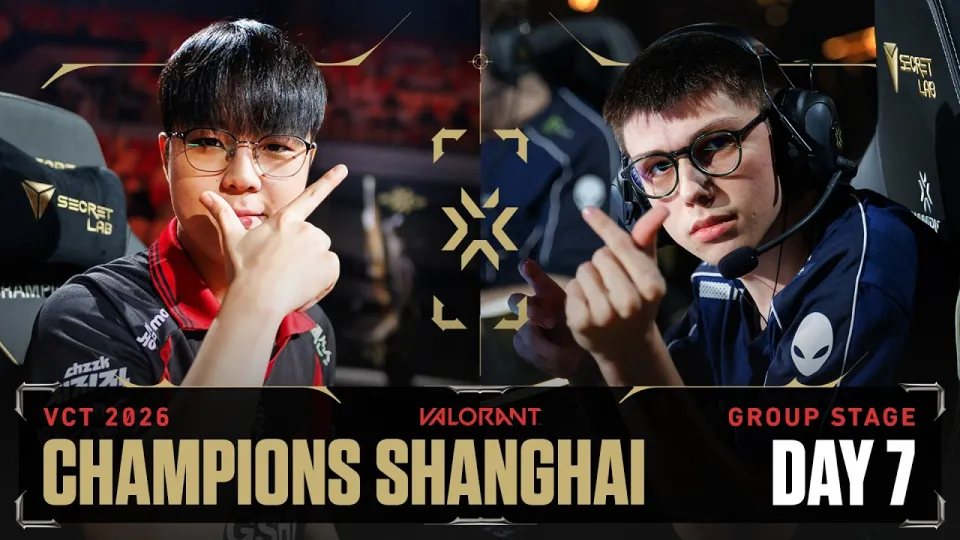
Video: VALORANT Champions Shanghai — Group Stage — Day 7
Want articles like this for your own video to promote it on YouTube and Google? Order them through the Telegram bot @sat_sit_bot. The bot writes and publishes the articles itself (with your YouTube video embedded) on popular topical websites (no ads). Free trial — 50 articles.
· based on the channel VALORANT Champions Tour
Valorant Champions Shanghai is the 2026 world championship, a 16-team tournament running from September 24 to October 18 that pits Americas, CN, EMEA and Pacific against each other for the biggest trophy of the year. Group stage day 7 closed out the opening phase, and the official broadcast from the VALORANT Champions Tour is the cleanest way to see which teams actually look like contenders; you can follow the bracket and schedule updates via the official VALORANT Esports hub on X.
What the Valorant Champions Shanghai format actually asks of teams
Sixteen squads qualify through their regional circuits and arrive in Shanghai with one job: survive the group stage and reach the playoff bracket. The event window is long — nearly four weeks — and the group phase is where seasons die quietly, because a single bad map-veto or one lost eco round can decide a tiebreaker. Day 7 of the group stage is the point where the math stops being theoretical: teams know exactly which opponents they need to beat and which round differentials they need to protect.
The stakes are higher than usual because 2026 has already produced two different Masters champions. That means no single roster arrives in Shanghai as the undisputed best team in the world. Instead, the group stage functions as the first real cross-regional stress test of the year, and day 7 is the last chance for a struggling favorite to fix its map pool before playoffs remove the safety net.
Why two Masters titles in one season change the group stage calculus
When one team wins both Masters events, the world championship is mostly about whether anyone can stop them. In 2026 the opposite is true: two different champions means the title is genuinely open, and every group stage result reshuffles the shortlist. A team that looked unbeatable in one region can arrive in Shanghai and discover that its default setups are already solved by opponents who have watched months of film.
This is also why day 7 carries unusual weight for seeding. Reaching playoffs is the minimum; reaching them on the right side of the bracket — avoiding the tournament favorite in the first round — can be the difference between a deep run and a quick exit. The broadcast's framing of "a fearless generation of challengers" is not just marketing: the gap between established names and new contenders has narrowed enough that group stage upsets are no longer shocking.
The tech pause problem that shaped the day 7 broadcast
Repeated technical pauses were the most visible story of the day for anyone watching live. Long broadcasts with multiple stops break momentum for viewers and, more importantly, for players: a pause in the middle of a pistol round or an execute can reset the rhythm a team spent the previous map building. Chat reaction was blunt, with viewers counting pauses the way they count rounds.
For anyone catching up on the VOD, the practical takeaway is to expect a long runtime and to treat the pauses as part of the record rather than as gaps to skip blindly. Pause-adjacent moments are often where coaches talk through adjustments and where comebacks begin, so the dead air is not always dead. The official channels listed in the broadcast description — the VALORANT Esports YouTube and Twitch channels among them — are the places where clean highlight cuts usually land first if the full replay feels too long.
The CN debate: eco losses, utility usage and what the chat got right
The loudest analytical thread in the comments concerned the Chinese teams. The criticism was specific rather than vague: losing rounds that should be unlosable, dropping 5v2 retakes and eco situations, and defaulting to set strategies that fall apart the moment an opponent adapts. Viewers also argued that stronger teams from other regions missed the event entirely, which sharpened the scrutiny on every CN loss.
There is a real point underneath the frustration. Set plays are a strength until they become a crutch; when a team's utility usage is scripted, a disciplined opponent can bait the execute, trade out the entry and force a reset. The counterargument is equally real — the group stage is exactly where teams experiment, and a roster that survives to playoffs has time to widen its playbook. What day 7 settled is that CN's representatives will be judged on adaptation, not on raw aim.
How to watch day 7 with the right context
If you are working through the group stage broadcast, a few habits make it far more useful than a passive watch:
- Track the map veto first. The veto often explains the result before a single shot is fired.
- Watch pistol rounds and the following bonus round as a pair. That two-round swing decides more group stage maps than highlight plays.
- Note which teams switch from set executes to loose mid-round calling when they fall behind — that is the adaptation signal scouts look for.
- Ignore the scoreboard for individual players in blowouts and watch utility usage instead; it is the more transferable skill into playoffs.
The day 7 broadcast also functions as a scouting document for the playoff bracket. Teams that showed a second viable composition on a comfort map are the ones worth flagging as dangerous, regardless of their group record.
Common questions about the Shanghai group stage
The most frequent viewer confusion is about what the group stage actually decides. It decides playoff qualification and seeding, not the championship; a team can lose maps in groups and still win the event. The second recurring question is about the schedule — the tournament spans September 24 to October 18, so the group phase and playoffs are separated by enough days that roster and preparation stories will shift.
The third theme is the tech pauses, and the honest answer is that they are a production issue rather than a competitive one, though they do affect momentum. The fourth is regional strength: comments claiming that better teams from other regions missed the event reflect a real debate about qualification depth, but the only response that matters is delivered on the server in Shanghai.
Useful links
- Official VALORANT Esports updates: https://x.com/valorantesports
- Facebook: https://www.facebook.com/ValorantEsports/
- Instagram: https://www.instagram.com/valorantesports/
- TikTok: https://www.tiktok.com/@valorantesports
- Twitch: https://www.twitch.tv/valorant
What day 7 tells us about the Shanghai playoffs
Day 7 confirmed that the group stage in Shanghai is doing its job: separating teams that can adapt from teams that only rehearse. The two Masters champions of 2026 remain the reference points, but the field behind them is compressed enough that seeding and map pools will decide more playoff series than raw firepower. The tech pauses are a production annoyance, not a verdict on the competition, and the CN criticism is best read as a demand for flexibility rather than a final judgment. For schedule changes, bracket updates and official announcements, follow the VALORANT Esports account on X. This breakdown is based on the group stage day 7 broadcast published by the VALORANT Champions Tour channel.
Key takeaways
- Valorant Champions Shanghai runs September 24 to October 18 with 16 teams from Americas, CN, EMEA and Pacific.
- Two different teams won Masters events in 2026, so Shanghai is the first true tiebreaker of the season.
- Group stage day 7 was the final round of the opening phase, deciding which teams advance to playoffs.
- The broadcast drew heavy viewer commentary about repeated tech pauses disrupting momentum.
- Chinese teams' utility usage and eco-round losses became the loudest talking point in the chat.
Source: VALORANT Champions Shanghai — Group Stage — Day 7 · Markdown version
Questions & answers
What is the VALORANT Champions Shanghai group stage?
It is the opening phase of the 2026 world championship, where 16 teams from Americas, CN, EMEA and Pacific play to qualify for the playoff bracket and secure seeding. The event runs from September 24 to October 18, so the group stage sets up the bracket rather than deciding the title.
Why were there so many tech pauses during day 7?
The pauses were production and technical issues during a long live broadcast, not a competitive ruling. They interrupt momentum for players and viewers alike, but they do not change results; the VOD simply runs longer because of them.
Did two different teams really win Masters in 2026?
Yes. The season produced two separate Masters champions, which is why Shanghai is treated as the first real tiebreaker between regions. No roster arrives as the clear favorite, and group stage results directly reshape the shortlist of contenders.
Are the Chinese teams really the weakest region at the event?
That is the loudest claim in viewer discussion, focused on lost eco rounds, failed 5v2 retakes and rigid set strategies. The fairer read is that CN teams are being tested on adaptation, and the group stage is where a roster can still widen its playbook before playoffs.